Compound Profile · Metabolic
Retatrutide
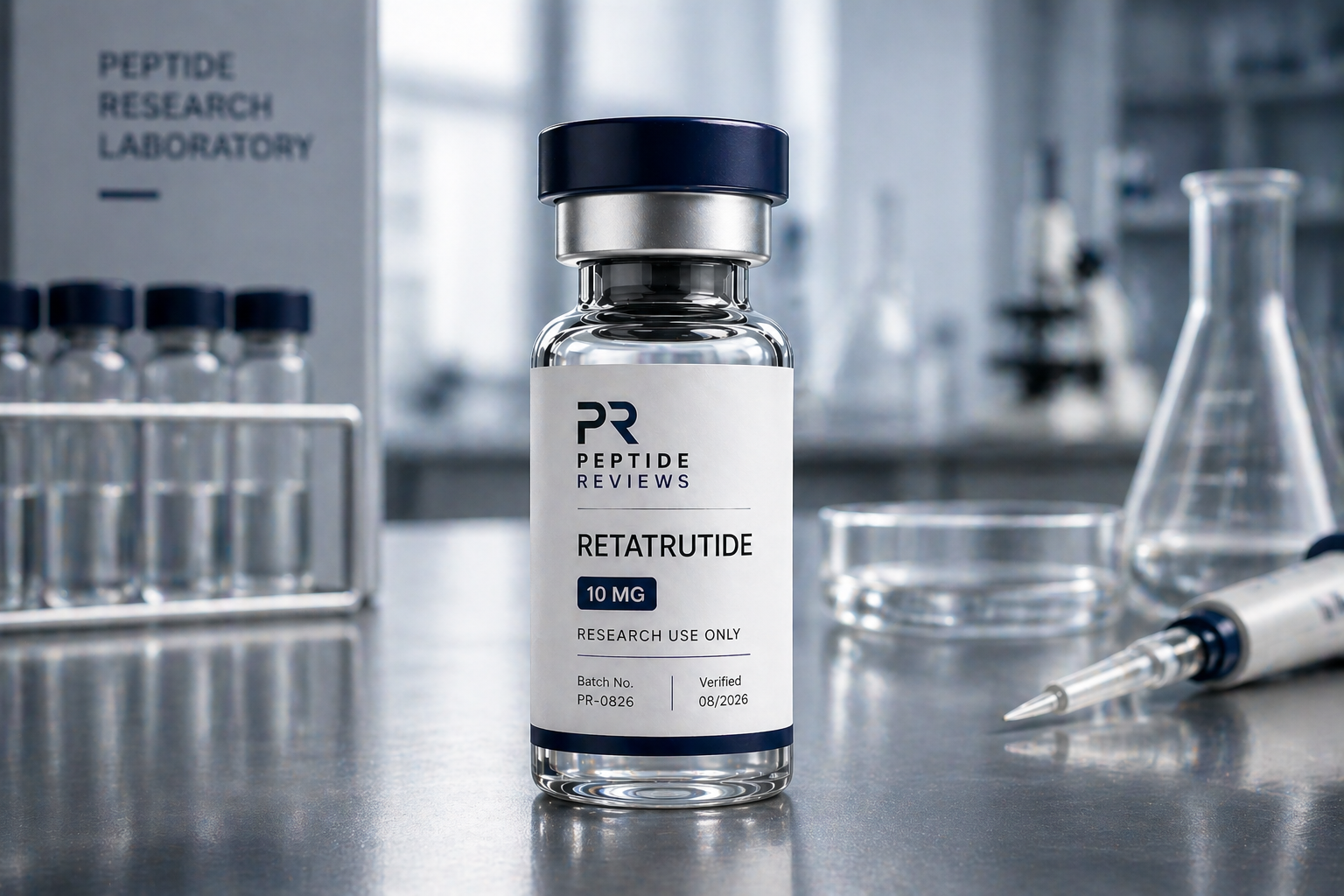
Retatrutide is a triple hormone receptor agonist targeting GLP-1, GIP and glucagon receptors. Clinical research shows exceptional results for weight loss and metabolic improvement.
Peptide Score
Evidence
Safety
Regulatory
Transparency
Quick verdict
Strongest weight-loss results of any peptide in trials so far. But still investigational — not approved by the TGA, with long-term safety data still being collected.
Reality check
What this isn't
- Not approved by the TGA
- Phase II trial data only — Phase III ongoing
- Gastrointestinal side effects common (nausea, diarrhoea)
- Long-term safety data limited
- Cardiovascular outcomes not yet established
- Educational research review only — not medical advice
~24%
Mean weight loss (top dose, 48 wks)
48
Weeks
338
Participants
Phase II
Trial phase
What this means: Reported reductions exceed any GLP-1 class peptide tested to date. Phase III trials are ongoing — these numbers are not final and have not been replicated long-term.
What participants experienced
- 1
Week 0–4
Dose titration; gastrointestinal tolerability emerges as primary side-effect signal
- 2
Week 8–12
Reported appetite changes; early weight reductions
- 3
Week 24
Substantial weight loss in mid-to-high dose cohorts; metabolic markers (HbA1c, lipid profile) improving
- 4
Week 48
Peak reported reductions; weight-loss curve still trending downward at trial end
- 5
Beyond Week 48
Phase III data collecting — durability, cardiovascular outcomes and long-term safety unknown
Full Retatrutide review
Retatrutide is a novel investigational peptide that activates three key hormone receptors: GLP-1, GIP and glucagon. This unique mechanism may lead to greater improvements in weight loss, blood sugar control and metabolic health.
It is being studied in late-stage clinical trials for obesity and type 2 diabetes. As of the last update, retatrutide is investigational and not approved for human use outside a clinical setting.
20 more articles on Retatrutide
How Retatrutide Works: A Triple Hormone Receptor Agonist Explained
MechanismGLP-1, GIP and Glucagon: The Three Receptors Retatrutide Targets
MechanismTriple Agonism vs Dual Agonism: Why Retatrutide Is Different
MechanismThe Mechanism of Retatrutide-Induced Weight Loss
EvidenceRetatrutide Phase 2 Trial: A Detailed Summary
EvidenceRetatrutide Phase 3 Trials: What's Coming and When
Looking at alternatives?
Compounds with comparable research interest but different evidence, regulatory status, or risk profile.
Metabolic
Semaglutide
Why consider it: Approved in Australia for type 2 diabetes and weight management. Smaller effect size than retatrutide, but multi-year safety data and cardiovascular outcome evidence (SELECT).
View profileMetabolic
Tirzepatide
Why consider it: Approved in Australia. Dual GIP/GLP-1 mechanism. Currently the strongest approved-medicine option for weight loss in head-to-head data.
View profileMetabolic
Liraglutide
Why consider it: Older, longer-track-record GLP-1 receptor agonist. Smaller effect size, but the most extensive real-world safety record in the class.
View profile