Compound Profile · Recovery
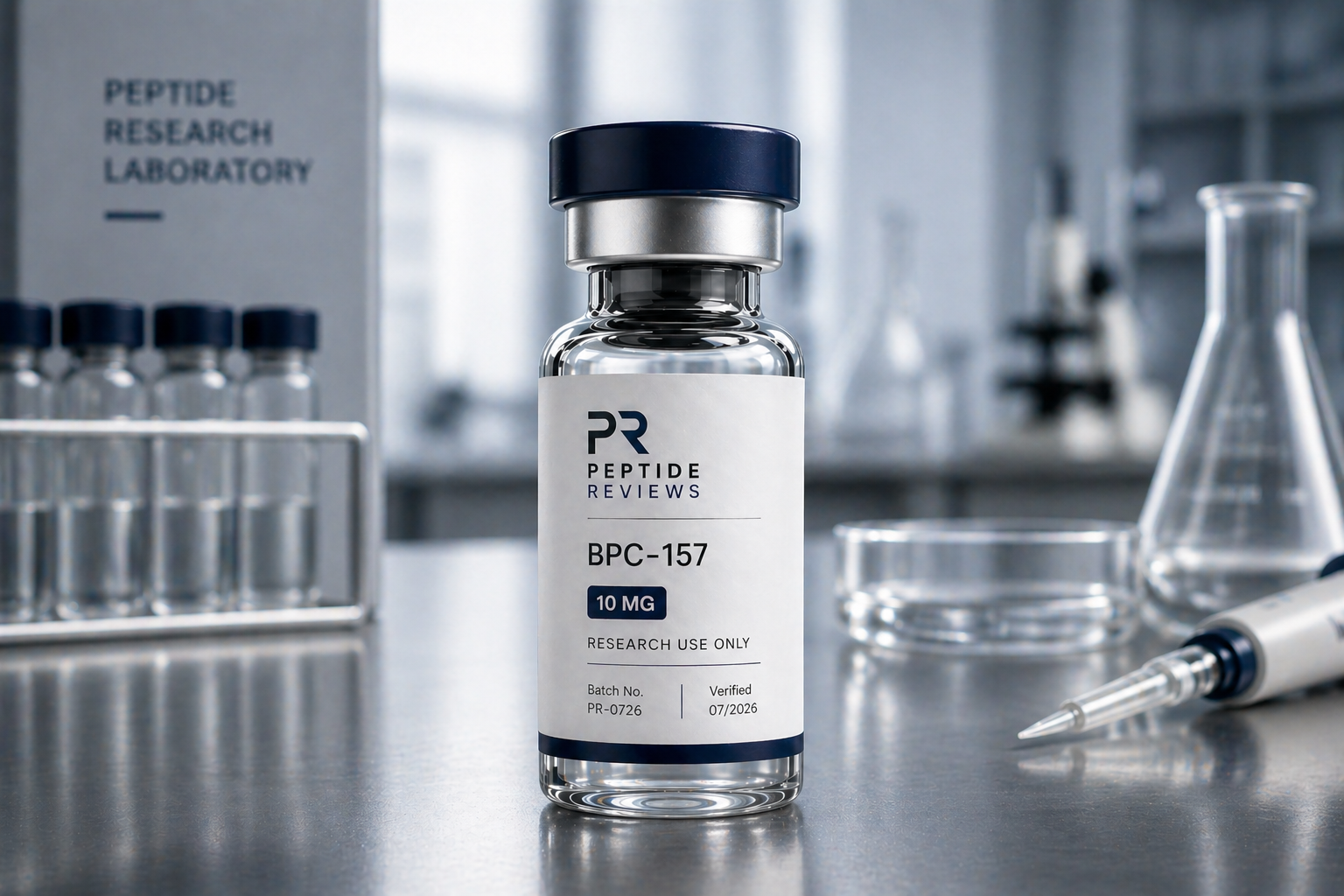
BPC-157
BPC-157 is a synthetic peptide derived from a sequence in human gastric juice. It is one of the most-discussed research peptides in tissue repair literature.
Peptide Score
Evidence
Safety
Regulatory
Transparency
Quick verdict
Most-discussed recovery peptide in research circles. Compelling preclinical evidence in tendon, ligament and gut models — but human clinical data is thin and it's on WADA's prohibited list.
Reality check
What this isn't
- Not approved by the TGA
- WADA prohibited — banned for athletes in competition
- Most evidence is from rodent models
- Translatability to humans is the open question
- Long-term safety in humans is not characterised
- Educational research review only — not medical advice
100s
Preclinical studies published
Preclinical
Trial phase
What this means: Hundreds of preclinical studies (mostly rodent models) report effects on tendon-to-bone healing, ligament repair, muscle injury recovery and gut mucosa protection. Robust human clinical trials are largely absent — translatability is the open question.
What participants experienced
- 1
Preclinical
Tendon, ligament, muscle and gut healing reported in rodent models
- 2
Mechanism studies
Effects on angiogenesis, growth factor expression, NO pathway modulation documented
- 3
Human clinical
Robust controlled human trials largely absent — primary evidence gap
- 4
Regulatory
WADA Prohibited List (S0 — non-approved substances) since 2022
- 5
Real-world reports
Anecdotal use is widespread; outcomes are not systematically catalogued
Full BPC-157 review
BPC-157 — body protection compound 157 — is a 15-amino-acid peptide derived from a section of a human gastric protein.
Most published evidence is from animal models. It is not an approved medicine in any major jurisdiction.
16 more articles on BPC-157
What Is BPC-157? An Educational Overview
MechanismHow BPC-157 Works in Research Models
MechanismBPC-157 and Tissue Repair: The Mechanism
MechanismBPC-157 and Angiogenesis: The Mechanism
EvidenceBPC-157 Preclinical Evidence: Comprehensive Summary
EvidenceBPC-157 and Tendon Research: What's Been Studied
Looking at alternatives?
Compounds with comparable research interest but different evidence, regulatory status, or risk profile.
Recovery
TB-500
Why consider it: Research-context cousin to BPC-157. Often discussed as a pair. Same regulatory status (WADA prohibited, not TGA approved) but different mechanism (thymosin beta-4 fragment).
View profileSkin
GHK-Cu
Why consider it: If interest is skin / wound healing rather than tendon, GHK-Cu has a deeper topical-research base and is widely used in cosmetic formulations.
View profileImmune
Thymosin Alpha-1
Why consider it: Has an approved indication in some jurisdictions for hepatitis B and immune support. Mechanistically different — focused on immune modulation rather than tissue repair.
View profile