Research only
4.5/ 5
A
Compound profileRecovery
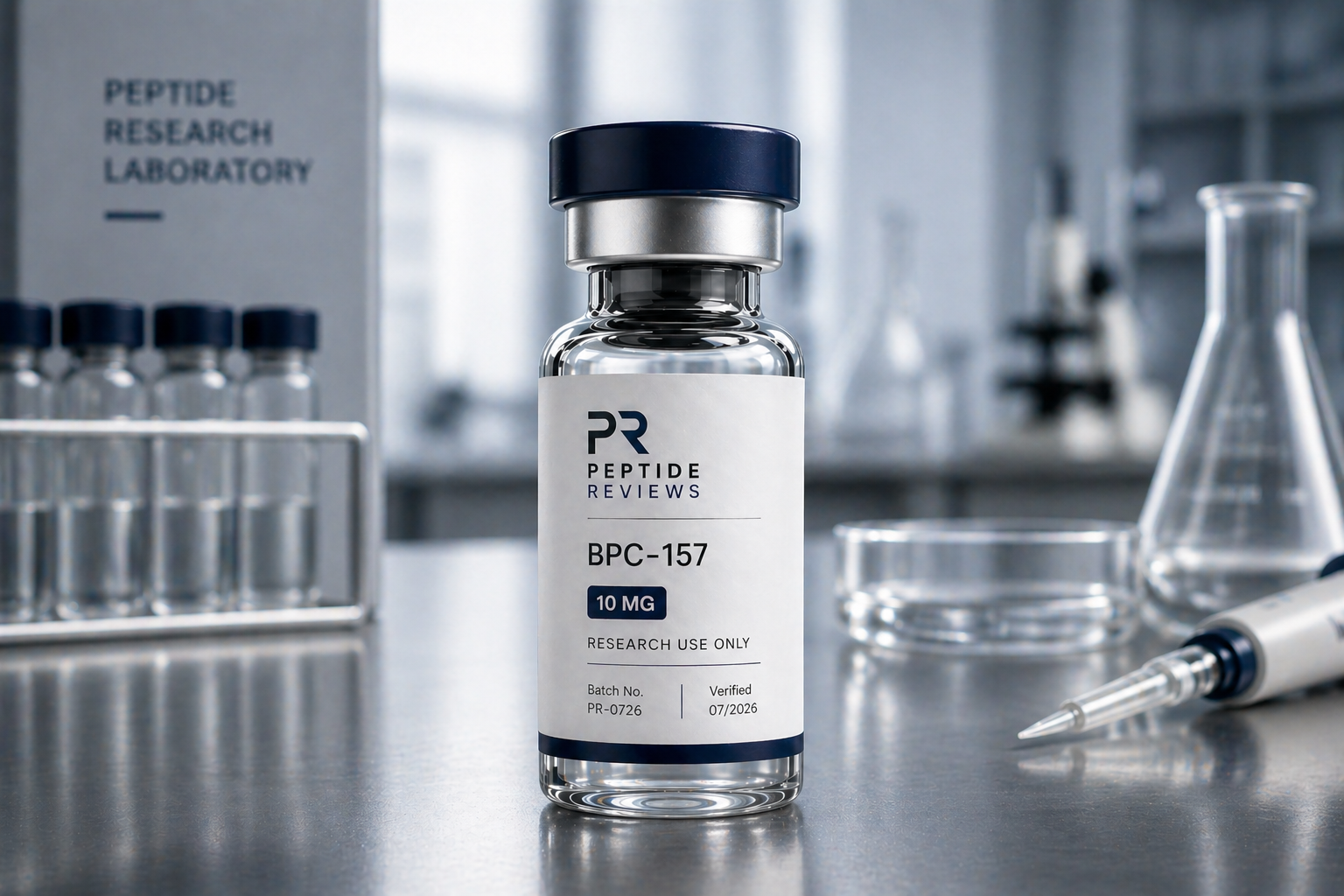
BPC-157
Primary research interestTissue repair & recovery research
Broad healing peptide researched for tissue repair, injury recovery and gut health support.
Last reviewed30 Mar 2026
View profileInjury rehabilitation research examines peptides being studied for their potential to enhance tissue healing, reduce inflammatory sequelae, and restore functional capacity. This page covers current scientific literature on peptides relevant to sports medicine and injury recovery contexts.
Last updated: 29 April 2026
Rehabilitation research investigates peptides that promote tissue-specific healing: BPC-157 for tendon and muscle repair, TB-500 for collagen remodelling and inflammation resolution, and GHK-cu for extracellular matrix restoration. Studies examine wound healing kinetics, inflammatory marker modulation, and functional restoration timelines in injury models.
BPC-157 shows the most robust evidence for accelerated tendon and muscle healing in animal studies, with reduced scarring and improved structural integrity. TB-500 research documents enhanced collagen I/III ratios and systemic inflammation reduction. GHK-cu in vitro studies show collagen synthesis and remodelling activity, though clinical validation remains preliminary.
Most injury rehabilitation studies use animal models or in vitro systems; human clinical trials are limited and often lack proper controls. Recovery timelines in animal models do not directly translate to human athletes. Comparative effectiveness against standard physiotherapy and nutrition is largely unexplored.
No peptides are ARTG-approved for injury rehabilitation. Research-grade peptides can be obtained for institutional study only; clinical use requires specific medical condition registration through TGA. Sports medicine practitioners cannot prescribe peptides for rehabilitation outside approved medical pathways.
Primary research interestTissue repair & recovery research
Broad healing peptide researched for tissue repair, injury recovery and gut health support.
Primary research interestTissue repair & recovery research
Supports tissue repair, reduces inflammation and improves recovery time in research models.
Primary research interestDermal collagen synthesis & wound-healing research
Copper tripeptide widely studied for skin and wound healing applications.
Primary research interestImmune-modulation & inflammation research
Immune-modulating peptide approved in some jurisdictions for hepatitis B and other indications.
Primary research interestGHRH-axis pulsatile release research
Long-acting GHRH analog often combined with GH secretagogues in research models.