Research only
4.5/ 5
A
Compound profileRecovery
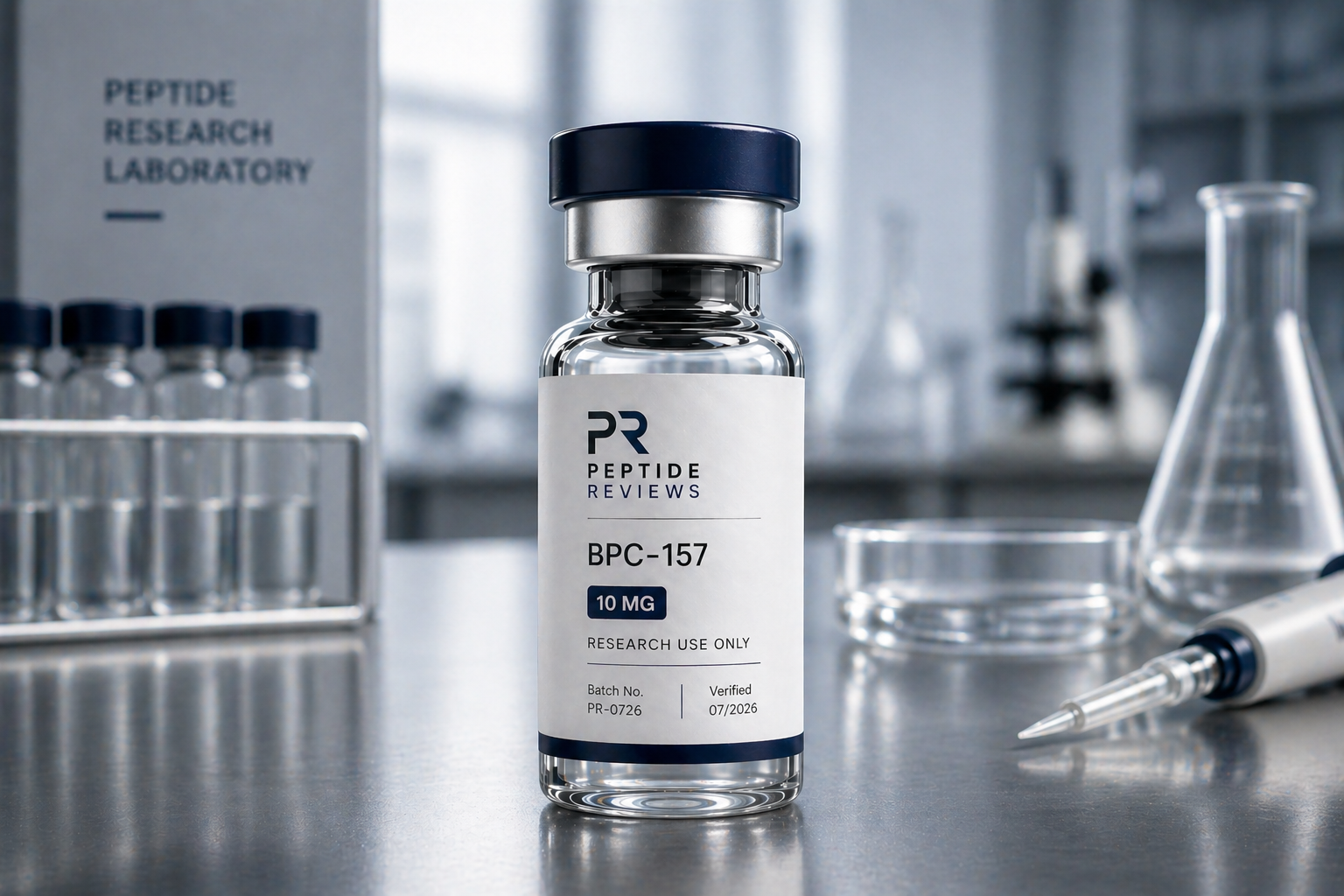
BPC-157
Primary research interestTissue repair & recovery research
Broad healing peptide researched for tissue repair, injury recovery and gut health support.
Last reviewed30 Mar 2026
View profileAthletic recovery research examines how certain peptides are being studied for their potential role in muscle repair and adaptation following training stress. This page reviews current scientific literature on peptide candidates and their investigated mechanisms in recovery contexts.
Last updated: 26 April 2026
Recovery peptide research investigates compounds that may support muscle protein synthesis, reduce exercise-induced inflammation, and accelerate tissue repair. Studies examine both growth hormone-releasing peptides and direct tissue-repair peptides, with focus on their signalling pathways in myogenesis and collagen remodelling. In vitro and animal models have provided preliminary mechanistic data, though human sports science applications remain largely preliminary.
Strongest evidence emerges from BPC-157 tissue repair studies in animal models showing enhanced tendon and muscle healing timelines. TB-500 research has documented increased collagen I/III ratios and reduced inflammatory markers in controlled study designs. Growth hormone secretagogues (CJC-1295, ipamorelin) show well-established endocrine activity in human trials, though recovery-specific applications in trained athletes remain underexplored.
Most recovery-focused studies lack long-term human safety data and are conducted in non-athletic populations. Few trials directly compare recovery peptides to standard physiotherapy or nutrition interventions. Publication bias favouring positive results and heterogeneous study designs make cross-peptide conclusions difficult. Real-world effectiveness in competitive athletes remains largely anecdotal.
Peptides are not registered on the ARTG for athletic recovery use. Research-grade peptides may be legally purchased for in vitro work or institutional research; personal use falls outside TGA pathways. Medical practitioners cannot prescribe peptides for recovery enhancement. All supply must be clearly labelled 'Research Use Only' and held to compliant storage/handling standards.
Primary research interestTissue repair & recovery research
Broad healing peptide researched for tissue repair, injury recovery and gut health support.
Primary research interestTissue repair & recovery research
Supports tissue repair, reduces inflammation and improves recovery time in research models.
Primary research interestGrowth hormone axis & body composition research
Long-acting IGF-1 analog studied for muscle growth and recovery in research.
Primary research interestGHRH-axis pulsatile release research
Long-acting GHRH analog often combined with GH secretagogues in research models.
Primary research interestSelective GH release & sleep architecture research
Selective GH secretagogue with a relatively clean side-effect profile in research literature.