Research only
4.0/ 5
B+
Compound profileSkin
GHK-Cu
Primary research interestDermal collagen synthesis & wound-healing research
Copper tripeptide widely studied for skin and wound healing applications.
Last reviewed4 Mar 2026
View profileCollagen stimulation research investigates peptides being studied for their effects on collagen I and III production, extracellular matrix integrity, and skin structural recovery. This page reviews the current scientific literature on peptides targeting collagen and skin matrix dynamics.
Last updated: 30 April 2026
Collagen research examines peptides that directly or indirectly upregulate collagen deposition and remodelling. GHK-cu is studied as an endogenous collagen-promoting signal; TB-500 for collagen I/III balance restoration; BPC-157 for tissue matrix repair and fibrillogenesis. Research contexts include fibroblast activation, growth factor signalling, and ECM cross-linking.
GHK-cu demonstrates potent fibroblast activation and collagen I upregulation in multiple in vitro systems and human skin explants. TB-500 animal models show collagen I/III ratio improvements and reduced pathological scarring. BPC-157 research shows enhanced collagen deposition and restored tissue architecture in wound and injury models.
Most collagen induction data derive from cell culture or animal models; human skin biopsies are limited. Long-term effects on skin structure and cosmetic outcomes in humans are poorly characterised. Topical versus systemic delivery effectiveness is largely unexplored. Dose-response relationships in human skin are undefined.
Collagen-stimulating peptides are not ARTG-registered for cosmetic use. Research-grade supply is available for institutional research; personal cosmetic use is not TGA-approved. Any therapeutic or cosmetic claim requires specific product registration or recognised exemption status.
Primary research interestDermal collagen synthesis & wound-healing research
Copper tripeptide widely studied for skin and wound healing applications.
Primary research interestTissue repair & recovery research
Supports tissue repair, reduces inflammation and improves recovery time in research models.
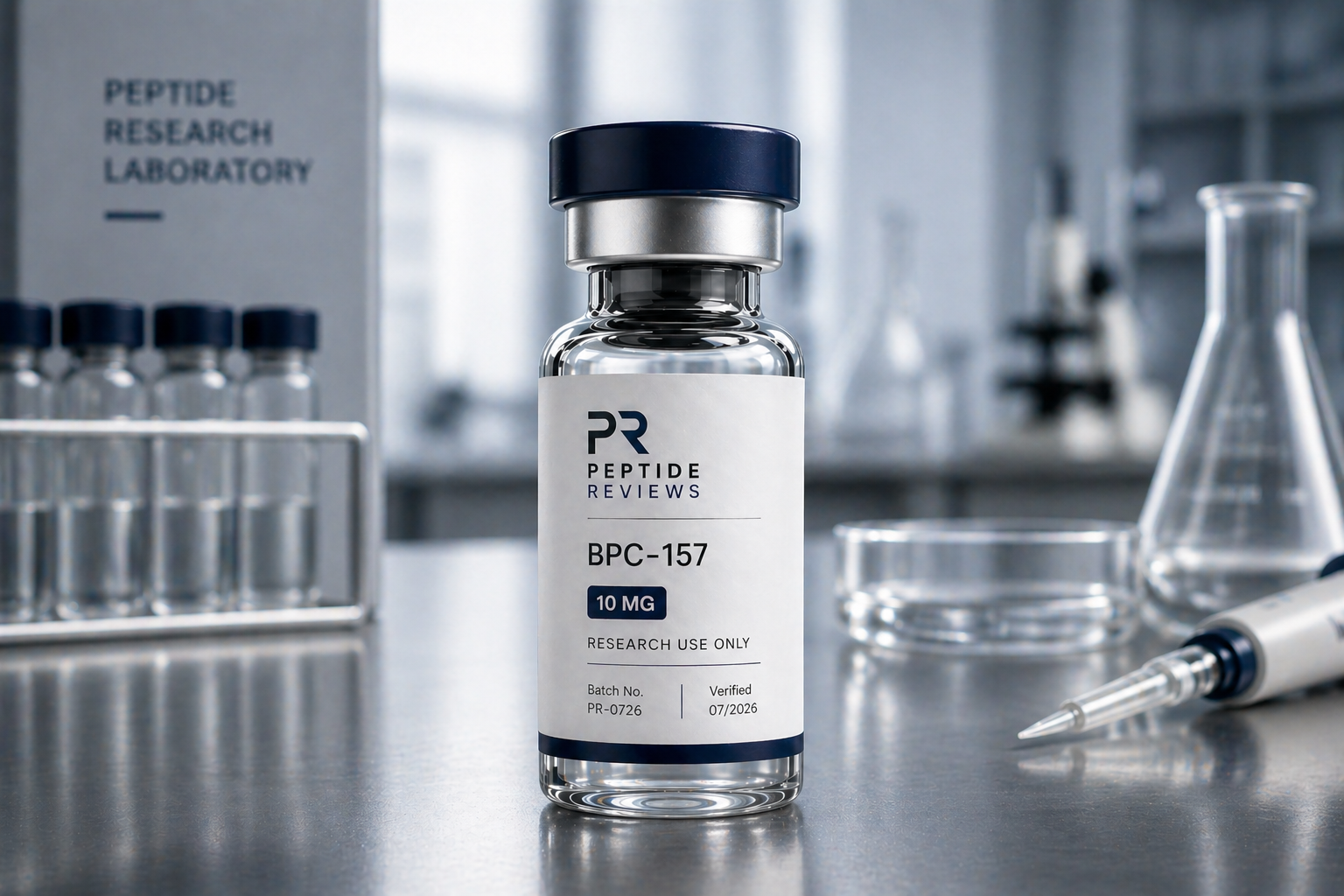
Primary research interestTissue repair & recovery research
Broad healing peptide researched for tissue repair, injury recovery and gut health support.
Primary research interestCellular ageing & mitochondrial research
Tetrapeptide studied in longevity literature with modest evidence base.